Listen to the podcast on:


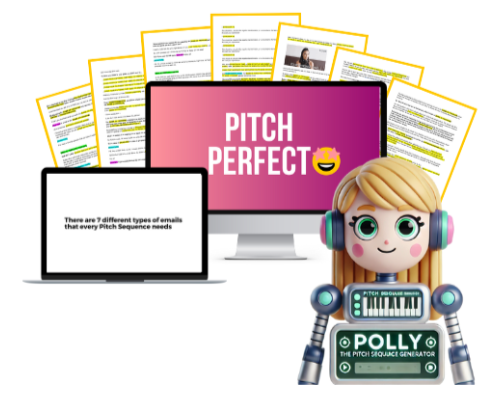
Pitch Perfect
Write sales emails that actually sell your offer, through a proven, 7-email Pitch Sequence strategy that meets each buyer type you have in your audience where they are and speaks to their unique buying habits.
Use code EMAILEMPIRE at checkout
to get $10 off your purchase!
Some buyers on your email list don’t need you to convince them they have a problem—they already know. They’re living it, they can name it, and they’ve probably tried to solve it before.
In this episode, Allison is breaking down the Pain Point Buyer. This is the Buyer Type who feels the frustration, sees the gap, and needs your sales email to connect the dots between their problem and your solution—without the gross, shame-y marketing tactics. Because yes, you can sell by naming what’s not working, without making your people feel terrible about themselves.
TAKEAWAYS:
The Pain Point Buyer already knows they have the problem your offer solves, so your job is not to manufacture pain—it’s to make them feel seen, understood, and supported.
Not everyone with a problem is ready to solve it, which means this email is best used later in your Email Pitch Sequence when your buyer is more aware and closer to making a decision.
Strong pain point messaging names the real frustration beneath the surface-level problem.
You can acknowledge what’s not working without using fear, shame, or overly dramatic copy to push someone into buying.
An email speaking directly to the Pain Point Buyer should clearly connect the buyer’s existing frustration to the transformation your offer helps them create.
Resources:
If today’s episode made you realize that your Email Pitch Sequence needs to help your Invitation Buyers ask the question that's been holding them back, Pitch Perfectwill help you write that email (+ the 6 other emails for your other 6 buyer types!). Click here to learn moreand enter code EMAILEMPIRE at checkout to snag $10 off your purchase.
Did you miss the episode about the first buyer type, the No Frills Buyer? You can listen in here.
Or how about the episode that talks about the Details Buyer? You can listen in here.
Or maybe the episode about the Skeptical Buyer? You can listen in here.
Or how about the episode about the Relational Buyer? You can listen in here.
Or how about the episode about the Invitational Buyer? You can listen in here.
CONNECT WITH ALLISON:
Follow Allison on Instagram
DID YOU HAVE AN 'AH-HA MOMENT' WHILE LISTENING TO THIS EPISODE?
If you found value and are ready to take action from listening to this episode, head to Apple Podcasts and help us reach new audiences by giving the podcast a rating and a review.
Music by: www.bensound.com
License code: 8G1GJZZDCLKGU9NR
Artist: : Benjamin Tissot
🤔 Want to work together?
Here’s how to get started!

Join the email marketing membership for coaches and experts, who want to sell their offer on autopilot.
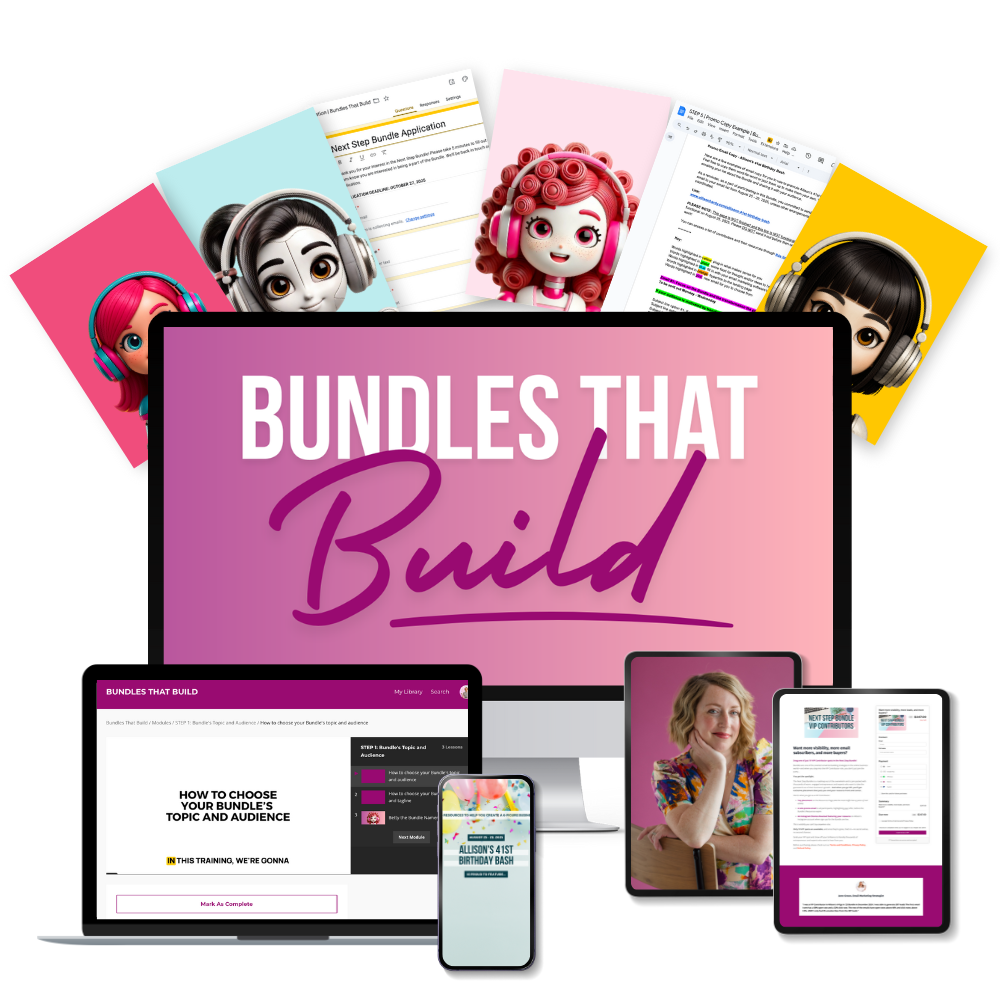
Host a bundle that builds your email list, your visibility, and your sales.
Transcript:
Hey, hey. Welcome to episode number 486 of the Email Empire podcast. Today we are continuing our seven buyer type series, where we're talking about the seven different buyer types on your email list and how to write sales emails that speak to what they need to know, understand, believe, or feel in order to buy from you.
Because not everybody on your email list buys in the same way. Some people need all the details. Some people just want the gosh darn link. Some people need proof. Some people need to understand you. Some people need an invitation to ask their weirdly specific question. And some people Already know they have the problem that your offer solves. They know it because they are living it. They can feel it. They can name it. They have probably tried to solve it before. They may have bought the template, downloaded the freebie, watched the webinar, read the book, tried to DIY it, asked Claude, listened to the podcast episode, made a plan, started the thing, stopped the thing, restarted the thing, and still found themselves in the same dang place.
And that's the buyer type that we're gonna talk about today in this episode, the pain point buyer. Now, before we go any further, I wanna make something really clear. When I say pain point, I'm not talking about, like, the old school, circa 2015 internet marketing way of writing about pain points. You know what I'm talking about. The kind of copy that basically says, "Let me stab you with a knife, and I'm gonna twist it around a couple times, and I'm gonna make you feel terrible about yourself, and then tell you that my offer is the only way out." No, thank you. We're not doing that here. That kind of marketing feels gross because it is gross. It's also not necessary.
You do not need to manipulate someone into recognizing their own problem, especially not this buyer type, Because the pain point buyer already knows. They know the pain point exists. They know it's frustrating because, hi, they're living it. They know it's costing them something. They know they do not want to keep living with it. And so your job is not to make them feel worse. Your job is to make them feel seen and understood and taken care of. And then show them that your offer helps them solve the thing they already know they want to solve. That's it.
So let's talk about who this buyer is, what they need from you, and the kind of sales email that helps them move toward the sale without making them feel like you're rubbing salt in their wound.
The pain point buyer is the person on your email list who has a specific problem that your program, your course, your membership, your service, your template, your offer solves. They know they have that problem, but here's the thing that we do not talk about enough in marketing. Not every person who has the pain point wants to solve it. I know that sounds weird, but stay with me.
There are people who have the problem that your offer solves, but they're not ready to solve it. They're not willing to solve it. They do not see it as urgent. They are not convinced it's costing them anything. They are comfortable enough with the dysfunction, and yeah, they're annoyed by it, sure, but they're not annoyed enough to do something about it. Or maybe solving it would require them to make a decision, to change the pattern, to look at something honestly, to invest money, time, ask for help, or admit that what they have been doing is not working, and they're just not there yet. And that's okay.
But that person is not your pain point buyer. They may become your pain point buyer eventually, but right now they're not. The pain point buyer is different. The pain point buyer is aware. They are paying attention. They have the language for the problem. They can pinpoint and say, "Yes, this is exactly what I'm struggling with." They can identify the gap between where they are and where they want to be, and they're not necessarily ready to buy the second they read your email, which is why we put this email towards the end of the email pitch sequence. It's why it's buyer type number six and not buyer type number one.
But they are much closer to the person who is still pretending that the problem isn't actually a problem. This is the person who reads your email and thinks, "Yes, that's me. Yep, I keep doing that. Ugh, I have tried to fix this. I know I need to deal with this. I do not wanna keep being the reason I am stuck." So when you write to this buyer type, you are not trying to convince them that the problem exists. You are acknowledging the problem that they already have. That's the nuance here. Because when you write an email to the pain point buyer, you're not trying to agitate them into action. You are simply connecting the dots between the pain point they already recognize having and the solution your offer provides.
So let's make this practical, okay? Let's say you sell a program that helps people build an email funnel. The pain point is not just you do not have an email funnel. That's a service level problem. The real pain point might be you're tired of depending on Instagram to make sales. You are tired of launching live every single time you wanna bring in sales. You are tired of having people join your email list and then have nothing to send them to. You are tired of only making money four times a year when you live launch. You are tired of looking at your email list and knowing there are people on it who could become buyers, but you don't have a system that actually invites them to buy. You're tired of creating content all week long and playing to the algorithm, only to feel like you're starting from zero again on Monday.
Those are the actual pain points, right? And notice what I did not do here. I did not say, "Is your business failing because you don't have an email funnel?" I did not say, "Are you sick of watching everyone else make sales while you sit there and wonder what is wrong with you?" I did not say, "Imagine another year going by where you never make money from your email list." You can acknowledge the pain point without being dramatic. You can name the frustration without shaming them for having it. You can say the quiet part they think in their head out loud without making them feel like total garbage. This is the email that this buyer needs.
They need an email that says, "I see the problem. I understand why it's frustrating, and I have this thing that can actually help you to solve it." That's it. This email does not need to be clever or spicy or manufacture urgency. It is not trying to create a problem that simply does not exist. It's simply holding up a mirror, a kind mirror, a strategic mirror, a mirror that says, "Hey, I think this is probably what's happening, and here's why this matters, and here's what can change."
Now, if you're listening to this episode and you know that you don't have this email in your email pitch sequence, or you've been listening to this entire series and you don't have the time or the bandwidth to figure out how to write all seven of these emails from scratch, I wanna invite you to check out my digital product, Pitch Perfect. Pitch Perfect helps you to build this seven-email pitch sequence that we've been talking about during this series that speaks to the different buyer types that you have on your email list so that you're not writing generic one-off sales emails and hoping that it works for everybody.
You're giving the no-frills buyer the gosh darn link. You are giving your details buyer all the information they need. You're giving your skeptical buyer believable proof. You're giving your relational buyer a better understanding of your lens. You're giving an invitational buyer a clear invitation to ask their questions. And you're giving the pain point buyer an email that says, "Yeah, I see the problem, and yes, this offer was built to help you solve it."
Inside Pitch Perfect, you will get the structure, the prompts, and the strategy to write your email pitch sequence without staring at a blank Google Doc wondering how many times you can say, "Doors are open," before everybody unsubscribes.
And right now, you can get $10 off with coupon code EMAILEMPIRE, all one word. The coupon code expires on January 12th, so if Pitch Perfect has been on your I should really grab that now list, now's the time. You can find the link and the coupon code hanging out for you in the show notes.
And next week, we're gonna continue this series with the final buyer type that you have on your email list, the transformational buyer. So make sure to come back for that. As always, thank you so much for listening to this episode of the Email Empire podcast, and I'll be in your AirPods next week