EP 484 | The Buyer Type Who Wants to Know YOU [7 Buyer Types Series]
Listen to the podcast on:


Pitch Perfect
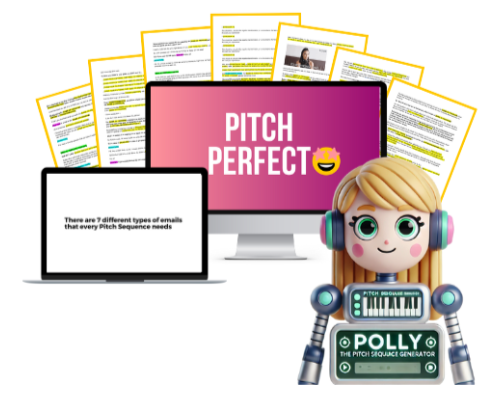
Write sales emails that actually sell your offer, through a proven, 7-email Pitch Sequence strategy that meets each buyer type you have in your audience where they are and speaks to their unique buying habits.
Use code EMAILEMPIRE at checkout
to get $10 off your purchase!
Not everyone on your email list is ready to buy because you listed the modules, bonuses, and deadline. Some of your buyers need to understand you first. They want to know why you do what you do, what has shaped your approach, and whether they trust the person behind the offer.
In this episode, Allison breaks down the Relational Buyer and shows you how to write an origin story sales email that creates connection and moves people toward buying. Because your story matters—but only when it clearly connects back to the offer you’re selling.
TAKEAWAYS:
The Relational Buyer is asking more than, “Is this offer right for me?” They also want to know if they trust you, understand your perspective, and feel safe learning from you.
A strong origin story email is not the same thing as a casual “about me” email. It should explain why you care about solving this problem and how that connects directly to your offer.
Your story does not need to be dramatic, deeply vulnerable, or trauma-filled to be effective. It simply needs to be relevant to the problem your offer solves.
The most persuasive stories help your reader understand your lens, your beliefs, and the reason your approach is different.
Don’t make your reader connect the dots on their own. After sharing your story, clearly explain why it matters and why it led you to create the offer you’re inviting them into.
Resources:
If today’s episode made you realize that your Email Pitch Sequence needs to help your Relational Buyers know and understand more about what makes you tick, Pitch Perfectwill help you write it (and the 6 other emails for your other 6 buyer types). Click here to learn moreand enter code EMAILEMPIRE at checkout to snag $10 off your purchase.
Did you miss the episode about the first buyer type, the No Frills Buyer? You can listen in here.
Or how about the episode that talks about the Details Buyer? You can listen in here.
Or maybe the episode about the Skeptical Buyer? You can listen in here.
CONNECT WITH ALLISON:
Follow Allison on Instagram
DID YOU HAVE AN 'AH-HA MOMENT' WHILE LISTENING TO THIS EPISODE?
If you found value and are ready to take action from listening to this episode, head to Apple Podcasts and help us reach new audiences by giving the podcast a rating and a review.
Music by: www.bensound.com
License code: 8G1GJZZDCLKGU9NR
Artist: : Benjamin Tissot
🤔 Want to work together?
Here’s how to get started!

Join the email marketing membership for coaches and experts, who want to sell their offer on autopilot.
Host a bundle that builds your email list, your visibility, and your sales.
Transcript:
Hey, hey, welcome to episode number 484 of the Email Empire Podcast. Today we are continuing our seven buyer type series where we're talking about the seven different buyer types on your email list and how to write sales emails that speak to what they need to know and understand in order to buy from you.
Because of the fact of the matter is that not everybody buys in the same way. Some people need details, some people need proof, some people need the big picture, some people need their objections handled, some people just want the gosh darn link, and some people need to know more about you. And that last one, that's the buyer type that we're gonna be talking about today, the relational buyer.
This is the buyer who wants to understand the person behind the offer. They want to know who you are, why do you do what you do, what do you believe, what shaped your approach. And yeah, maybe, like, what your coffee order is. But mostly they want to know what makes you tick. And I know this can feel weird because when you sit down to write a sales email, your instinct might be to talk about the offer, right?
That makes sense. The modules, the bonuses, the price, the deadline, the transformation. Absolutely all of that matters, but not necessarily for the relational buyer. They are not only asking, "Is this offer right for me?" But they're also asking, "Do I trust this person? Do I understand what they're coming from? Do I want to learn more from them? Do I feel safe buying from them?" And that means one of the most powerful emails you can write for this buyer type is your origin story email, and this email has one job. It's to help your reader understand why. Why did you create this offer, and why is your approach trustworthy? That's it.
So instead of saying, "Here's what you get inside of my program," you're showing them the deeper reason the program exists in the first place. Why did you start your business? Why do you do this specific work? What problem are you tired of seeing? What did you experience or notice that made you think, "Hey, there's gotta be a better way"? That's the story that this buyer type needs.
Now, here's the important part. The relational buyer is not necessarily looking for similarities between you and them. I'm not saying that similarities don't matter. They can help, yes, of course. If you're a mom selling to moms or a former teacher selling to teachers or a business owner who has walked the same road as your clients, that shared experience can, yes, create connection.
But the deeper need is not sameness. The deeper need is understanding. This buyer type wants to understand your lens. They want to know why you see the problem and the solution the way you do. They want to know what you believe. That shapes how you teach, how you coach, how you consult, or how you create. That is what makes this email different from a regular, like, about me email. An about me email says, "Here are some facts about me."
An origin story sales email says, "Here's why I care about solving this problem, and here's how that connects to the offer that I'm inviting you into." The second version is what actually helps people to buy. Let me give you an example. Let's say you sell a program that helps women simplify meal planning.
A basic personal story might be, "I grew up cooking with my grandma, and I've always loved food." That's sweet, and sure, that might create some connection, but it does not necessarily sell the offer. A stronger origin story might sound like, "I created this program because I was tired of watching busy moms feel like they were failing their families because dinner was chaotic, takeout was happening again, and every meal planning system they tried made them feel even more behind. I wanted to create something that felt simpler, lighter, and actually doable in a real-life week. Now, your reader understands the why behind the offer. They understand what you believe and what kind of approach they can expect from you. And if I'm a relational buyer, that matters to me.
Or let's use another example. Let's say you help business owners with their bookkeeping. You could say, "I've always been good with numbers." Cool. That's great. But a more strategic version would be, "I started this work because I kept seeing brilliant business owners avoid their numbers, not because they were irresponsible, but because every financial conversation made them feel behind, embarrassed, or stupid. I wanted to make bookkeeping feel clear, empowering, and shame-free.
That is an origin story with a point. It tells me who you are, what you stand for, and how your offer is different. It gives me a reason to trust you. This is where a lot of people get stuck in writing emails for the relational buyer. They think that this story has to be wildly vulnerable. They think that it has to share the hardest moment of their life, or they have to dig up some dramatic story to make people care, and you don't. Your story doesn't have to be dramatic to be effective. It just has to be relevant. You do not have to share anything that you don't want to share. You do not have to trauma dump. You do not have to tell a story that you have not fully processed yet. You do not have to turn your inbox into a therapy session. A good origin story can come from a client pattern you noticed, a frustration you had with your industry, a repeated problem your audience kept bringing to you, a season of life that changed how you think, a gap you saw in the market, a solution you needed for yourself and then you created for others.
For me, part of my origin story around email funnels comes from 2020. Like so many people, my life turned completely upside down. My kids were two and six at the time, and they came home for 18 months straight. My husband was working as a chaplain in a hospital and got reassigned to the COVID ICU. And my work days went from five to six hours a day to, like, maybe two if I was lucky.
And so I could not continue to build a business that required me to be live all the time like I had. I could not launch all the time, I could not post all the time, and I could not constantly be available in order to make sales. That season of life shaped the way I think about email and specifically email funnels. It shaped the way I think about automated sales sequences. It shaped the way I think about building a business that can operate inside an actual real life. That story connects directly to the work that I do now. Because I just don't teach email funnels because I think they're cute. I teach email funnels because I believe women, moms, coaches, and experts need systems that allow their business to keep selling without requiring them to be on every second of the day. That's the deeper motivation. And when I share that in a sales email, my point is not, "Hey, look at me and my story." The point is, "This is why I built the thing I'm inviting you into."
The relational buyer needs that story to connect back to the offer. Otherwise, it might be personal, but it's not persuasive. So when you write this email, keep the structure simple. First, start with a moment of realization. Then name the problem you solved. Then explain why the problem mattered to you. Then connect it to your offer. Then make the invitation. That might look like, "I created this because," I got tired of seeing blank. I kept noticing blank. I needed a better way to blank. I realized my clients didn't need more information. What they did need is blank. These are all really strong starting points. Then after you tell the story, you make the connection obvious. You can say things like, "This is why I created offer name. That's why this program is built the way it is. That's why this offer focuses on a specific piece of your method." Do not make the reader connect the dots on their own.
You are the writer. You are the business owner. You are the entrepreneur. You are the person guiding them through this email. So tell them why the story matters.
And if you're listening to this episode or you've listened to the series up to this point and you still need help with your email pitch sequence and speaking to the seven different buyer types that you have on your email list, make sure to check out my digital product, Pitch Perfect. Pitch Perfect helps you write a strategic email pitch sequence that speaks to the different buyer types on your email list, including, yes, the relational buyer, so your sales emails are not just repeating, "Doors are open," again and again and again.
You can grab it through the link in the show notes, and there's even a special discount code hanging out there waiting for you.
So thanks for listening to this episode of the Email Empire podcast. I will be back in your AirPods next week.