Listen to the podcast on:


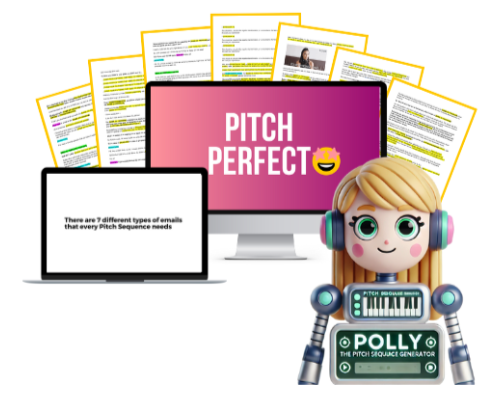
Pitch Perfect
Write sales emails that actually sell your offer, through a proven, 7-email Pitch Sequence strategy that meets each buyer type you have
in your audience where they are and speaks
to their unique buying habits.
Use code EMAILEMPIRE at checkout
to get $10 off your purchase!
In this episode, Allison is continuing the 7 Buyer Types Series with one of the most common buyer types sitting on your email list right now, the Skeptical Buyer. This person isn’t difficult or impossible to sell to, they’ve just been burned before, and they’re reading your emails with a little side-eye.
In this episode, you’ll learn why your biggest, flashiest client wins might actually make skeptical buyers trust you less, and what to share instead. Allison breaks down how normal, grounded client stories can lower the wall, build belief, and help your next buyer finally think, “Okay… this could actually work for me.”
TAKEAWAYS:
Skeptical buyers are not cynical buyers, they are people who have been disappointed by overhyped promises, under-delivered offers, and vague success stories before.
When you lead with your biggest client win too early, a skeptical buyer may write it off as an exception instead of seeing it as proof that your offer can work for them.
Grounded, “normal” client stories can be more persuasive because they help your audience see the realistic path from where they are now to what is possible.
Your skeptical buyer needs context, transparency, and specificity, not louder claims, more exclamation points, or another shiny screenshot.
Instead of simply dropping a testimonial like a receipt, use client stories to connect the dots between the problem, the shift, the strategy, and the result.
Resources:
If today’s episode made you realize your Email Pitch Sequence needs to help your Skeptical Buyers see themselves in your offer, Pitch Perfectwill help you write it (and the 6 other emails for your other 6 buyer types). Click here to learn moreand enter code EMAILEMPIRE at checkout to snag $10 off your purchase.
Did you miss the episode about the first buyer type, the No Frills Buyer? You can listen in here.
Or how about the episode that talks about the Details Buyer? You can listen in here.
CONNECT WITH ALLISON:
Follow Allison on Instagram
DID YOU HAVE AN 'AH-HA MOMENT' WHILE LISTENING TO THIS EPISODE?
If you found value and are ready to take action from listening to this episode, head to Apple Podcasts and help us reach new audiences by giving the podcast a rating and a review.
Music by: www.bensound.com
License code: 8G1GJZZDCLKGU9NR
Artist: : Benjamin Tissot
🤔 Want to work together?
Here’s how to get started!

Join the email marketing membership for coaches and experts, who want to sell their offer on autopilot.
Host a bundle that builds your email list, your visibility, and your sales.
Transcript:
Hey, hey, and welcome to episode number 483 of the Email Empire Podcast. Today, we are continuing our series on the different buyer types inside of your email list, and how to write sales emails that actually speak to the way that they buy. And so today, we're talking about the buyer type that I think more and more of us have sitting on our email lists right now, and that buyer type is the skeptical buyer. Now, when I say skeptical, I don't mean cynical, I don't mean difficult. I don't mean this is the person who is just never gonna buy, and they're just gonna poke holes in everything you say for sport. Not what I'm talking about.
The skeptical buyer is the person who's been burned before. They bought the program that promised them the world, and then it gave them a Google Doc and a good luck. They joined the mastermind that said it was gonna be high touch, and then suddenly the only touch they got was a Slack channel that nobody monitored. They bought the course that was supposed to be plug and play, and then realized they needed 19 other pieces in place before they could actually use it. They hired the service provider who said, "Don't worry, I've got you," and then that service provider ghosted them for three weeks. They've been around the block, and because of this, they're not walking into your email pitch sequence wide-eyed and ready to believe every beautiful promise you put in front of them. They're reading your emails with their arms crossed a little bit. They're interested. They may even want the thing that you're selling. But they're also sitting there thinking, "Okay, but will this actually work for me? Is this just another over-hyped thing? Are they only showing me that one person who got the unicorn result? What's the catch? Am I going to regret this?"
And it makes sense, right? Especially right now, because we are operating businesses in a trust recession. People are tired. They've seen the big promises. They are tired of the screenshots with no context. They are tired of the, "I made $100,000 in 14 minutes while taking a nap- Energy. They're tired of the AI slop. They are tired of being sold the dream without being told what it actually looks like to get there. And when your audience is tired, skeptical, and a little guarded, your job is not to bulldoze over them with louder claims. Your job is to lower the wall that they have built. And one of the best ways to do that is by sharing client stories, but with a caveat.
Because here's what I see a lot of business owners doing that accidentally causes them to lose the skeptical buyer. They reach for the biggest story first, that massive win, that client of yours that just hit it out of the park, the she joined and made $87,000 in 12 days story. And listen, I'm not saying you shouldn't share that. You absolutely should. Those stories are powerful. They show what's possible. They give people a vision. They create belief. But with the skeptical buyer, if you lead with that giant hit it out of the park story too early before you've built enough trust, it absolutely can backfire because the skeptical buyer does not hear that story and immediately think, "Amazing. How can I buy?" They think, "Yeah, that person probably had a really big audience," or, "That works because they were already successful," or, "That's the exception," or, "Cool for them, but that's not my life."
And the second they decide that that story, that client story, no matter how amazing it is, is not relevant to them, the wall goes up, and not just a little. The wall gets reinforced, and it gets taller, and it gets a moat with alligators and security cameras because now that story, the story that you thought was gonna create trust, has accidentally confirmed what they've already feared: this probably won't work for someone like me.
So when you're writing to the skeptical buyer, the goal is not to prove the biggest possible outcome. The goal is to prove believability, and that means you need to share the normal stories, the run-of-the-mill stories, the this person made a smart shift and got a solid result stories, the this person stopped doing the thing that was draining them and started doing something more strategic stories.
They need to see themselves in the story. They need to see the messy middle, the decision-making, the what's changed. They need to see the results were not magic. It was strategy, and it was implementation, and, you know, good old-fashioned hard work with guidance from the thing that you're selling. The skeptical buyer isn't looking for something sexy. They want something that is safe. And not safe as in, "I never have to take a risk," because buying something always involves some level of risk. But safe as in, "I understand what I'm actually saying yes to." Safe as in, "This person is not trying to manipulate me with a shiny result." Safe as in, "I could see how this realistically would work for me." And that's where normal client stories are so powerful.
So let's talk about what this actually looks like inside of an email pitch sequence. So when you're writing an email for the skeptical buyer, you wanna think of the kind of proof they actually need. Because again, this buyer does not need more hype. They do not need seven exclamation points. They need grounded proof and context and transparency and specificity, and they need you to not be weird about the fact that they might have doubts. So instead of you writing an email that says, "Look at this amazing client. They made $50,000 after working with me," you might write an email that says, "I wanna show you a smaller client win today," because honestly, this is the kind of shift that most people need to see first so that they can create momentum. Do you see the difference there? One is trying to impress, while the other feels like you're trying to help them understand.
And so for that skeptical buyer, the distinction matters because they're not evaluating your offer. They are evaluating your integrity. They're asking themselves, "Can I trust this person?" So instead of just sharing the outcome, you're gonna share the context. What happened before? What was the client struggling with? What did they try that didn't work? What shift did they make? What happened after that shift? And what should the reader take away from that? Because a lot of entrepreneurs share testimonials or client stories like they're dropping a receipt onto the table, like, "See? It works." But the skeptical buyer needs more than the receipt. They need an explanation so that they can connect the dots.
And so if you need help writing sales emails for the skeptical buyer or for the other- six buyer types that we're covering in this series, I highly recommend you check out my digital product, Pitch Perfect. Pitch Perfect will m- help you to map out and write your seven email pitch sequence, with each email speaking directly to a specific buyer type inside your audience. With each email speaking directly to a specific buyer type you already have on your email list. Because when every email has a different job, your sequence can speak to more of the people who are already paying attention, already interested, and already considering buying your offer. And because you are listening to this podcast episode, you can use code EMAILEMPIRE, all one word, at checkout to get $10 off your purchase of Pitch Perfect. Just head to allisonhardy.com/pitch-perfect, and if you missed that link or that code, it'll be hanging out in the show notes for you. And as you're thinking about your own email pitch sequence this week, I want you to ask yourself, are you only sharing those big flashy wins, or are you sharing normal stories that will help those skeptical buyers to believe, "Oh, this could actually work for me"? Because that might be the exact story your next buyer needs to hear.