EP 488 | The Buyer Type Who Buys the Possibility [7 Buyer Types Series]
Listen to the podcast on:


Pitch Perfect
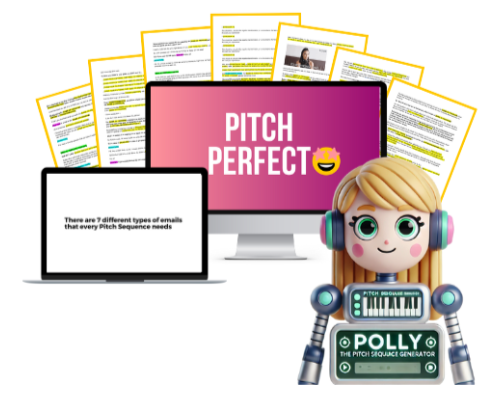
Write sales emails that actually sell your offer, through a proven, 7-email Pitch Sequence strategy that meets each buyer type you have in your audience where they are and speaks to their unique buying habits.
Use code EMAILEMPIRE at checkout
to get $10 off your purchase!
Some buyers aren’t purchasing because they’re desperate to escape a problem, they’re purchasing because they can finally see what’s possible on the other side of it.
In this episode, Allison breaks down the transformational buyer and shows you why simply listing what your offer includes isn’t enough to move this person toward a decision.
You’ll learn how to connect the work inside your offer to the meaningful outcomes your audience actually wants, without relying on vague, fluffy promises. Because your potential buyers shouldn’t have to figure out why your offer matters; your sales emails need to make that connection for them.
TAKEAWAYS:
Learn how the Transformational Buyer differs from the Pain Point Buyer, even when both are experiencing the exact same problem.
Use grounded aspirational language to help your audience picture a desirable future that still feels specific, believable, and connected to your offer.
Add “so that” language to your sales copy to clearly connect the work your buyer will do with the outcome they want to experience.
Review your offer’s features and ask what each one changes, creates, or makes possible for your buyer.
Stop ending your sales copy at “you’ll learn how” and start showing your audience why that knowledge actually matters.
Resources:
If today’s episode made you realize that your Email Pitch Sequence needs to help your Invitation Buyers ask the question that's been holding them back, Pitch Perfect will help you write that email (+ the 6 other emails for your other 6 buyer types!). Click here to learn more and enter code EMAILEMPIRE at checkout to snag $10 off your purchase.
Did you miss the episode about the first buyer type, the No Frills Buyer? You can listen in here.
Or how about the episode that talks about the Details Buyer? You can listen in here.
Or maybe the episode about the Skeptical Buyer? You can listen in here.
Or how about the episode about the Relational Buyer? You can listen in here.
Or how about the episode about the Invitational Buyer? You can listen in here.
Or how about the episode about the Pain Point Buyer? You can listen in here.
CONNECT WITH ALLISON:
Follow Allison on Instagram
DID YOU HAVE AN 'AH-HA MOMENT' WHILE LISTENING TO THIS EPISODE?
If you found value and are ready to take action from listening to this episode, head to Apple Podcasts and help us reach new audiences by giving the podcast a rating and a review.
Music by: www.bensound.com
License code: 8G1GJZZDCLKGU9NR
Artist: : Benjamin Tissot
🤔 Want to work together?
Here’s how to get started!

Join the email marketing membership for coaches and experts, who want to sell their offer on autopilot.
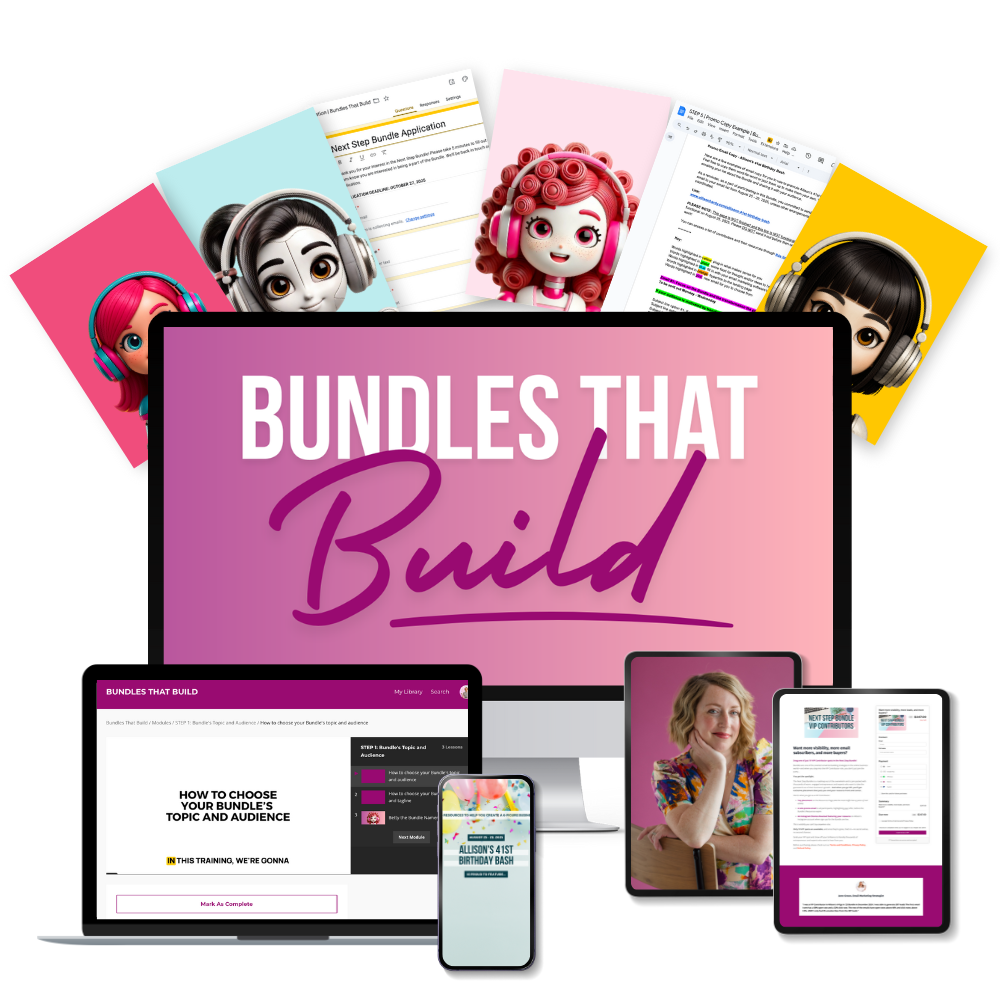
Host a bundle that builds your email list, your visibility, and your sales.
Transcript:
Hey, hey, welcome to episode number 488 of the Email Empire Podcast. Today we are continuing our seven Buyer Types series, where we're talking about the different types of buyers on your email list and how to write sales emails that speak to what they need to know, understand, believe, or feel in order to buy from you.
Because not everybody buys in the same way. Some people need the details. Some people need proof. Some people need the FAQ email that handles the question under the question. Some people need to know who you are and why you do what you do. Some people need a very simple invitation to ask the one obscure question that is holding them back. Some people need their pain point named clearly so that they can see your offer solves the thing that they've been trying to solve. And some people are not primarily motivated by the pain point itself. They know they have the pain point. They can identify it. They can probably tell you exactly how it's showing up in their business, their life, their schedule, their clients, their brain, their inbox, whatever it is.
But they're not necessarily buying because they wanna get away from the pain. They are buying because they wanna move toward what becomes possible when that pain point is solved, and that's the buyer type we are talking about today, the transformational buyer. Now, this buyer type is super similar to the pain point buyer, which we talked about in the last episode. And if you haven't listened to that episode yet, you can find the link along with all of the other episodes in this series hanging out in the show notes. The transformational buyer is similar to the pain point buyer in that they have the pain point that your program solves. They also know they have the pain point.
But solving the pain point is not the main driver, unlike the pain point buyer. For the transformational buyer, they buy because of the outcome. They are motivated by the future. They are motivated by the possibility. They are motivated by who they become, what they get to do, what opens up, what changes, what feels different, and what is finally available to them once this problem is no longer running the show. So while the pain point buyer is thinking, "I need this problem solved," the transformational buyer is thinking, "What becomes possible when I solve this?" That's the difference between the two. And it matters because the email that you write to the pain point buyer and the email you write to the transformational buyer might be talking about the same gosh darn offer.
You might use the same words when describing the pain point, and you might even talk about the outcome being the same, but the positioning of the offer is different. The emotional driver is different. The focus of the email is different. The pain point buyer needs to feel like you understand the problem that they have. The transformational buyer needs to feel like you can help them see the other side of the problem, and that's where that aspirational language comes in. And before I go any further, I wanna be very clear with what I mean about aspirational language. Because when I say aspirational, I do not mean like fluffy, empty platitudes. That's not what I'm talking about. I do not mean like step into your best level self and manifest abundance while sipping matcha in your dream office, Unless, like, that truly is your brand and your people love that and you know that and they understand that about you, which in case, you do you, boo.
But for a lot of us, aspirational has got a bad rep because it has been used in ways that feel very connected from actual reality. Aspirational language circa 2015 sounds thi- like things like this. "Imagine waking up every day with total freedom. Imagine never worrying about money ever again. Imagine living the life of your dreams." And listen, there's nothing, like, technically wrong with those statements, but they're so freaking broad that most people do not know what to actually do with them. They do not create a clear picture. They do not connect the work of the offer to the actual transformation. They just kind of float around the air looking pretty, and that is not the kind of aspirational language that I am talking about.
Aspirational language in 2026 is grounded. It connects the thing your buyer has to do with the thing that they actually want to experience. It connects the work to the payoff. It connects the process to the possibility. And one of the easiest ways to do this in your sales email for this specific buyer type is with a so that phrase.
A so that phrase is structured like this. Do X so that you can do Y. For example, in my membership, Emails That Sell, I help my members write sales emails. So for example, in my membership, Emails That Sell, I help my members write email funnels, right? A so that phrase for me in my program when I'm selling that membership might look something like this. Inside the program, you will write your nurture sequence and pitch sequence so that new subscribers are not just sitting on your list doing nothing.
They're actually being guided toward your offer in a strategic way that builds trust, that creates connection, and that makes sales without you needing to launch or be on every single day of every single month. What this piece of copy is doing is speaking directly to the transformational buyer type and painting a picture as to why the work that they're gonna do, why the systems that they set up connect to why they are motivated and what they're motivated by. And that's what the transformational buyer is listening for.
They want to know why does this matter, not just like, "Hey, what do I get?" But what changes because of this? So because of this tool, what happens? What's the outcome? So if you're writing an email, a sales email for the transformational buyer, it is your job to build that bridge. Here's the work, here's the shift. Here's what becomes possible because of that shift. And this is why so that language works so incredibly well. It forces you to connect the dots because a lot of entrepreneurs stop too soon in their sales emails. They say things like, you're gonna learn how to create a lead magnet. You're gonna learn how to organize your content. You will learn how to sell your offer with email. You will learn how to create a scalable system. Cool, but why? Why does that matter? What does this make possible? What does that change? What does that free up for them? What does that help them to move toward?
The transformational buyer needs the second half of that sentence. They need the "so that". You will learn how to create a lead magnet so that you're not relying on random Instagram visibility to grow your audience. You will learn how to organize your content so that your ideas turn into actual marketing assets instead of living in a messy Google Doc you never open again. You will learn how to sell your offer with emails so that your sales are not dependent on how much energy you have to show up that week. You will learn how to create a scalable system so that your business can keep growing without requiring more and more of you every single time you wanna bring in sales. That's the transformation, right?
So if you've been listening to this series, you already know about my digital product Pitch Perfect. But if you're new here, hi. I want you to check out Pitch Perfect. What Pitch Perfect does is it helps you to write a strategic seven-email pitch sequence for your offer, including emails that speak to the different kinds of buyers we have been talking about inside of the series. So instead of sitting down to write sales emails and wondering like, "What in the world am I supposed to say?" You have a clear structure for your pitch sequence so that each email has a job, each email speaks to a different decision-making need, and your offer is being presented in a way that actually helps the different buyer types you have in your audience to make a buying decision.
And right now, you can get Pitch Perfect for $10 off using the coupon code EMAILEMPIRE, all one word. But that discount, I do wanna tell you, expires on July 12th. So if you wanna write a pitch sequence that does more than just announce your offer and cross your fingers and I's and toes and hope that people click and buy, go grab Pitch Perfect before the coupon expires. You will find the link and that coupon code hanging out for you in the show notes.