EP 473 | How to Build a Strategic Email Funnel That Turns Email Subscribers Into Paying Clients
Listen to the podcast on:



Snag 1 of only 12
VIP weeks in 2026
VIP Week is my high-touch, done-for-you service where I audit your lead magnet, map your Nurture and Pitch Sequence, and write the emails that turn your email subscribers into excited buyers.
Snag one of the 12 VIP Week spots available in 2026 through the yellow button below.
Is your email funnel truly "strategic"? In this Email Empire episode, Allison breaks down the difference between a random string of automated emails and a truly strategic email funnel that actually converts email subscribers into paying clients.
Because the truth is, most “Welcome Sequences” aren’t doing the job they should be doing. Listen in and you’ll learn how to build an email funnel that intentionally moves people from downloading your lead magnet to confidently saying yes to your offer.
TAKEAWAYS:
A true email funnel has one clear purpose: to close the gap between where your email subscriber is now and where they need to be to confidently buy your offer. Every email should move them one step closer to that decision.
What most entrepreneurs call a “Welcome Sequence” should actually function as a Nurture Sequence that shifts beliefs, deepens understanding of the real problem, and positions you as the person who can help solve it.
A strategic email funnel maps out the role of every email, from clarifying the problem to challenging current approaches to introducing your unique method. Nothing is random or filler.
Your Email Pitch Sequence should speak to multiple buyer types, because people make purchasing decisions for different reasons. When you only send one or two sales emails, you’re likely only reaching a fraction of your potential buyers.
The difference between email subscribers who disappear and email subscribers who become clients often comes down to one thing: whether your email funnel was intentionally designed to lead them toward a decision.
Resources:
Get access to the singular email (and a fill-in-the-blank template) that was directly responsible for selling over $80,000 worth of courses, memberships, and digital products in 2025 by clicking here.
VIP Week is my high-touch, done-for-you service where I audit your lead magnet, map your Nurture and Pitch Sequence, and write the emails that turn your email subscribers into excited buyers. Snag one of the 12 VIP Week spots available in 2026 by clicking here.
CONNECT WITH ALLISON:
Follow Allison on Instagram
DID YOU HAVE AN 'AH-HA MOMENT' WHILE LISTENING TO THIS EPISODE?
If you found value and are ready to take action from listening to this episode, head to Apple Podcasts and help us reach new audiences by giving the podcast a rating and a review.
Music by: www.bensound.com
License code: 8G1GJZZDCLKGU9NR
Artist: : Benjamin Tissot
🤔 Want to work together?
Here’s how to get started!

Join the email marketing membership for coaches and experts, who want to sell their offer on autopilot.
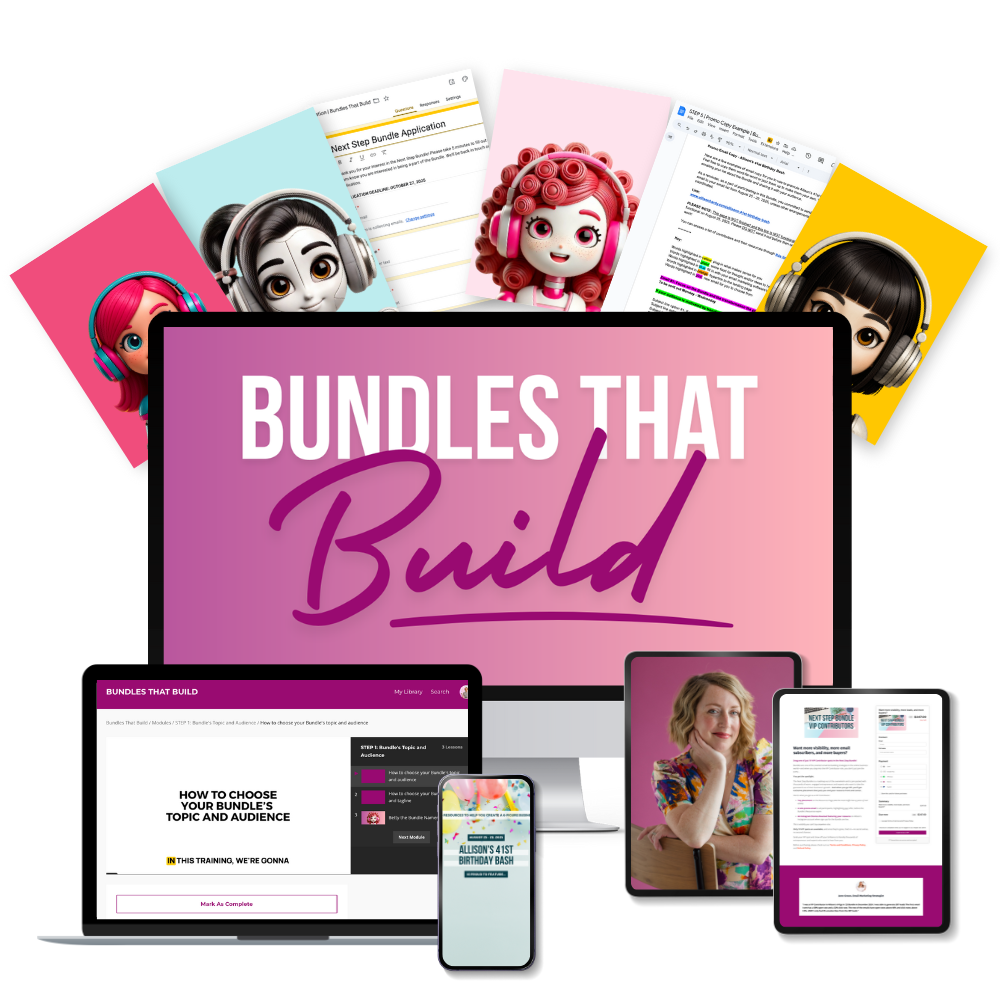
Host a bundle that builds your email list, your visibility, and your sales.
🤷♀️
Know you need email marketing support but not sure what offer fits you, your business, or your budget best? Click the yellow button and fill out a quick form. Allison will be back in your inbox with a few options and suggestions for you.
Transcript:
Hey, hey. Welcome to episode number 473 of the Email Empire Podcast. I am so glad you're here today. I wanna talk about something that gets thrown around a lot in the online business space, but very rarely gets explained in a way that actually makes sense.
And that is the idea of a strategic email funnel, because I hear people every single day say things like, I just need a welcome sequence, or I already have a funnel, or my personal favorite. I set up emails once and it just didn't work. My people don't respond to email marketing, and when I dig in a little bit deeper and ask them what's.
Actually inside their email funnel, what I usually find isn't strategy. What I find is a random pile of emails that are haphazardly thrown together. The reality here is that just because you have a sequence of emails that automatically sends after someone downloads your lead magnet. That does not mean you have a strategic email funnel.
Most of the time when I get into the email funnels of my clients. This is what it looks like. Your new email subscriber downloads a lead magnet. They get a few emails with things like, welcome, here's my story. Here are my social media links. Here's a random tip. Here's a podcast I was a guest on. And then the sequence just ends and the business owner is left wondering.
Why isn't anybody buying? Meanwhile, your new email subscriber is sitting there thinking, okay, cool. I got a free thing. And that's when the relationship ends. There's no movement. There's no intention. There's no direction. And that's really the real problem because a strategic email funnel is designed to do one thing and one thing only.
Close the gap between where someone is right now and where they need to be. To confidently say yes to your offer. Every email in your email funnel should be moving someone one step closer to that direction. Your email funnel is not there to entertain your subscribers. It is not there to randomly educate them.
It is not there just filling up space in their inbox. The function of the email funnel is to move your subscriber, your email subscriber, closer to a buying decision because the absolute best way that you can help someone is by getting them into your paid program. This is also why I don't call those first emails after someone downloads your lead magnet, a welcome sequence, which is what a lot of folks in my industry call those emails because.
Honestly, most welcome sequences that I've seen are kind of useless. They welcome someone, they introduce the business owner, they share a few fun facts, and then they disappear. That's not what those emails should be doing. Those emails should be nurturing. That's why I call it a nurture sequence. They should help someone understand the problem that they actually have.
Because it's usually not the surface level one, right? It's a little bit deeper why that problem matters. What happens if they don't solve it? What do they risk losing or gaining and what solving that problem could actually look like for them? Those emails are doing the belief shifting because when someone starts to think about their pain point differently, that pain point that you solve, they start to do differently
and that's when they start to see changes in that area. These emails help someone go from, I downloaded a free thing to, oh, this person understands my problem to, oh, they might actually be able to help me solve it. That's nurturing and that my friends. It's strategy. Okay, so now that we've talked about like the why, now I wanna talk specifically about what a strategic email funnel actually looks like.
So inside of a strategic email funnel, every single email has a job. And that job is to close the gap between, again, where the email subscriber is now and where they need to be. To say yes to your invitation to buy some emails, help them understand the problem, some emails, help them see why their current approach isn't working.
Some emails show them a new way to think about the problem. Some introduce your method or philosophy, and eventually. The only next step that is available to them is to join your program, and that's when they move into the pitch sequence, which is where you make the invite to join. Now, this is where things get even more strategic because the pitch sequence isn't just a bunch of emails saying, Hey, buy my program reiterated in multiple ways.
That's not a strategy either inside of your audience. You have seven different buyer types. Seven different ways that people make decisions. Seven different ways that people are motivated to make decisions. Seven different reasons why someone might say yes. And seven different limiting beliefs and objections, which means your pitch sequence should include at least.
Seven emails, which means each email in your pitch sequence speaks directly to one of those buyer types. Some buyers need proof, some need logic. Some need to understand the process. Some need to see themselves in someone else's success story. Some need to understand the risk. Some just need a clear. Next step and for you to say, this is it for you.
If you're only sending one or two sales emails, or if you're speaking in your sales emails to the type of person that buys in the way that you buy, you're probably only speaking to one or two buyer types, which means you're leaving a lot of sales on the table and a lot of impact behind. A strategic email funnel makes sure that every buyer type hears the message and gets the invitation in the way that they need to hear it.
So when someone tells me that their email funnel isn't working, it's almost never because they're a bad writer. And it's certainly not because email marketing is broken, like all the gurus say on Instagram, and it's certainly not because their audience doesn't buy or doesn't like email. It's usually because there was a never actual strategy implemented in the first place.
Their email funnel wasn't designed to move someone toward a decision. They were just emails.
Adding in strategy to your email funnel. That's the difference between someone downloading your lead magnet and disappearing forever, or someone downloading your lead magnet and becoming a paying client a few days later. This is a strategic. Email funnel, and this is what I can build for you inside of a VIP week, because what I see happening for so many really smart, capable entrepreneurs is this, they know they need an email funnel.
They know they should probably have a nurture sequence. They know they should probably have a pitch sequence. Maybe they have something in place, but it's just fluff and it's not actually serving anyone. Really, it was haphazardly thrown together and they haven't actually revisited it well ever, but the actual time and space to build out this email funnel, to map the strategy
and to figure out what each email is supposed to do that where things stall. So instead of a VIP week, I'll do that just for you. We start with a one-on-one call where we audit your lead magnet, where we make sure the thing that is bringing email subscribers into your email funnel is actually attracting the right subscribers in the first place.
Then. I get to work, I map out the entire email funnel strategy, the nurture sequence, the pitch sequence, what each email needs to accomplish, what belief it needs to shift, what buyer type it needs to speak to, and then I actually write those emails for you. So by the end of the week, you walk away with an email funnel that isn't just a stack of nicely written emails.
It's a strategic system designed to turn email subscribers into excited buyers, and it's the reason why I keep this offer small, and it's the reason why I only take 12 of these clients per year because this work is so high touch. It's focused and it's designed to actually get this done, not sit in your drafts for another six months.
So if you've been telling yourself, I just need a welcome sequence, or I already have a funnel, but it doesn't really do anything, the real question here to ask yourself is do you actually have a strategic email funnel or do you just have a series of emails? Because those are two very different things.
If you wanna learn more about a VIP week and what that could look like for you, you can head to the show notes to find the link to learn more about how a VIP week can help you.